


People don’t watch streams anymore.
They live with them on.
Imagine turning on a stream while you work. Not to watch closely, just to have something there. A soft rain loop. A dimly lit room. Occasional movement you barely notice, but would miss if it disappeared.
A rain loop humming in the background.
Soft keyboard sounds late at night.
A calm presence that doesn’t ask for anything.
Background ambient and ASMR-style streams aren’t a trend. They’re a response to overstimulation, to constant performance, to content that demands more attention than people have to give. What’s emerging instead is a quieter form of live video: streams designed not to be watched, but kept around.
What Background, Ambient, and ASMR Streams Really Are
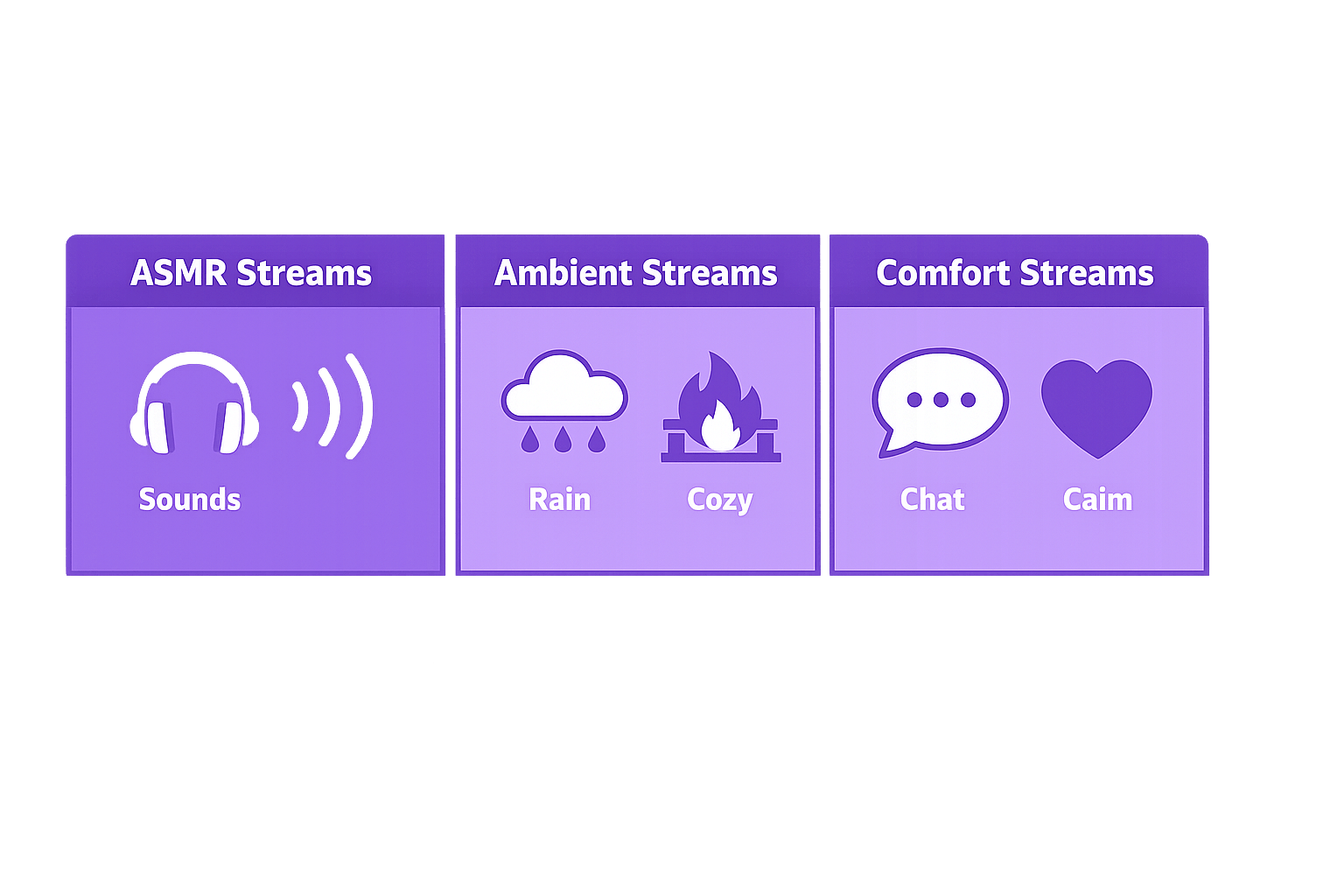
At their core, these streams are built to stay on, not to be actively consumed.
A background stream is intentionally quiet. It’s predictable, low-pressure, and comfortable to leave running while someone works, relaxes, or falls asleep. That’s fundamentally different from a stream that’s quiet because nothing is happening.
Within this style, three formats appear most often:
- ASMR streams are sensory-first. They prioritize sound — whispering, tapping, brushing — often close-mic’d and designed for relaxation or sleep.
- Ambient streams are environment-first. Rain, fireplaces, aquariums, cozy rooms. The setting matters more than the streamer.
- Comfort streams are presence-first. A calm personality, gentle pacing, and familiar routines. Less about triggers, more about reassurance.
They overlap, but they’re not interchangeable. What connects them is intent. None of them demand attention.
From Watching Streams to Living With Them
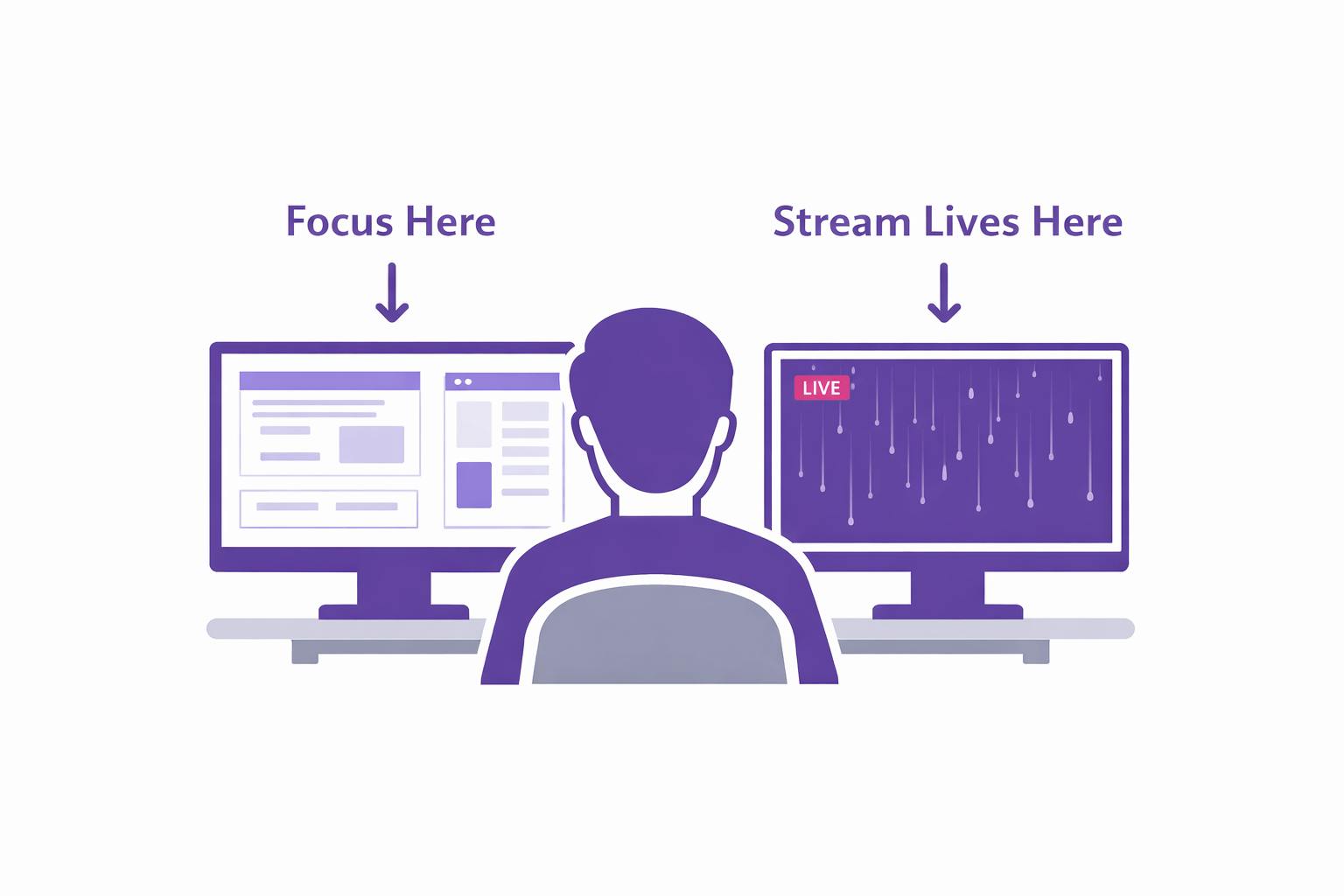
Live streaming used to be an event. You showed up, watched closely, and reacted in real time.
That’s no longer how most people engage.
Today, streams often exist alongside other activities — on a second monitor, on a TV across the room, or running quietly in the background while someone works, cooks, scrolls, or unwinds. These second monitor streams don’t ask to be the focus. They fit into daily life as background energy.
Background and ambient streams don’t fight this behavior. They lean into it. Instead of asking viewers to focus, they adapt to how attention actually works now.
Why Low-Demand Streams Feel So Good
Most online content asks something from the viewer: react, chat, keep up, stay engaged.
Quiet streaming doesn’t.
It offers relief.
Relief from reacting.
Relief from participating.
Relief from feeling “on.”
For many viewers, the appeal isn’t stimulation — it’s permission. Permission to lurk. Permission to drift in and out. Permission to exist without being noticed.
Background streams don’t compete for attention — they live beside it.
That absence of demand is what makes these streams feel calming, even when very little is happening.
Quiet Streams, Long Sessions, and Unexpected Monetization
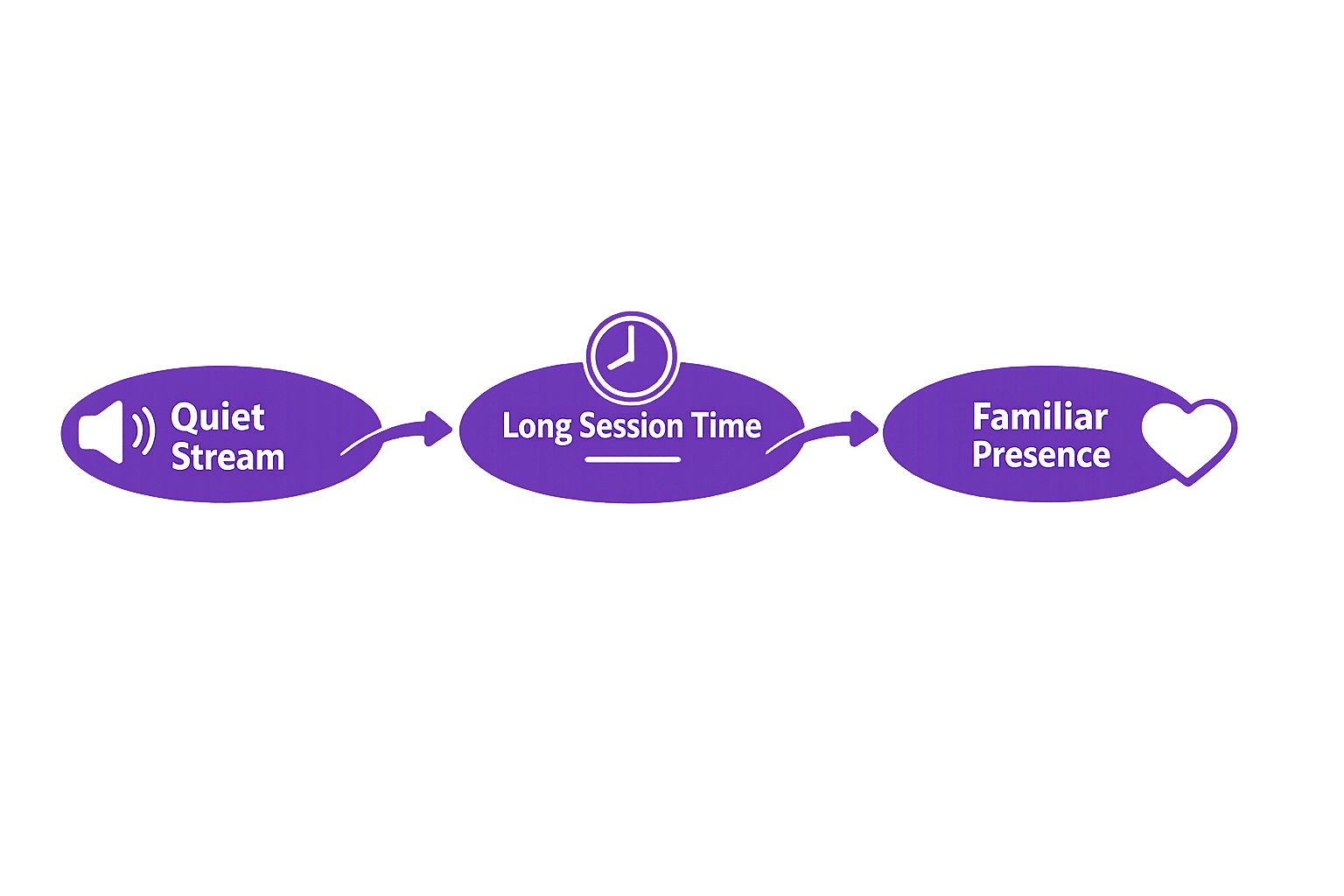
Quiet streams don’t rely on moments. They rely on time.
Picture someone who turns the same stream on every evening while they wind down. They don’t chat much. They don’t always watch. But over weeks, the presence becomes familiar — almost expected.
When support happens in these environments, it rarely feels spontaneous or impulsive. It feels like a small thank-you for something that’s been there consistently. No interruption. No pressure. Just appreciation.
Quiet streaming works because it aligns with how viewers already behave — passively, comfortably, and on their own terms. The value isn’t hype. It’s staying power.
Background Stream Formats That Actually Hold Attention
The best background streams are simple, but never careless. They’re predictable in the way a good environment should be.
Formats that consistently work include:
- Looped ambience with minimal motion
Rainy windows, fireplaces, aquariums — steady, soothing, easy to leave on. - Quiet activity streams
Drawing, journaling, crafting, coding. Enough movement to feel alive, never enough to distract. - Soft-talking wind-down streams
Gentle commentary or reading meant to be listened to more than watched. - Always-on environments
Streams designed to run for hours without narrative progression.
Consistency matters more than creativity here. Viewers should know exactly what kind of space they’re stepping into.
Where Background Streams Go Wrong
Quiet only works when it feels deliberate.
Common mistakes include accidental silence, sudden audio changes, visually busy scenes, or calling attention to low chat activity. Nothing breaks immersion faster than explaining the stillness.
The strongest background streams don’t apologize for their pace. They trust it.
Who This Style of Streaming Is Actually For
This isn’t a fallback. It’s a different lane.
Background ambient and quiet streaming styles are especially well-suited for introverts, night streamers, artists, coders, and creators burned out on constant performance. You don’t need endless charisma or nonstop interaction.
You just need presence.
The Future of Streaming Is Quieter Than We Expected
Across platforms like Twitch, YouTube, and Kick, live video is becoming something people live with, not something they sit down to watch.
As more viewing shifts to TVs and second screens, quiet streaming and always-on environments start to feel less like alternatives and more like the default.
The creators who thrive won’t be the loudest. They’ll be the ones people are happy to keep around.
Streaming Doesn’t Always Need Your Attention
Not every stream needs to be watched.
Some just need to be there.
If you’ve ever wanted to stream without performing — without forcing energy you don’t have — background ambient and ASMR formats may already fit the way you live.
Sometimes, the quietest streams last the longest.